
The Power of Data Storytelling
in Anti-Racism
Research
The BRISWA 2.0 project represents a significant shift in how we approach social justice in sports.
While data is often presented as cold numbers, our latest report, Storytelling with Data, illustrates how we can transform statistics into powerful narratives that drive institutional change.
Data alone is rarely enough to change minds or policies. The challenge in modern research is that raw data can be ambiguous or overwhelming. Data storytelling is the practice of building a narrative
around a set of data to help convey its meaning to a specific audience. By combining context with clear visuals, we make complex issues like systemic racism in football understandable and urgent.
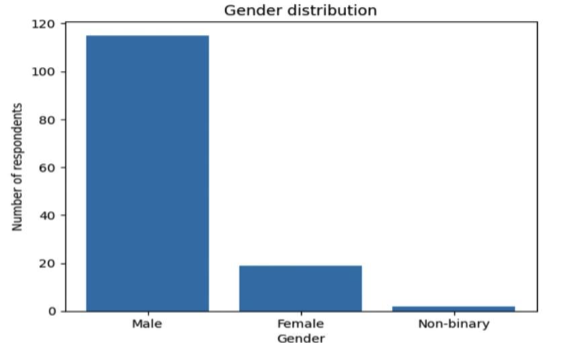
Effective storytelling starts with choosing the right visual tools. Our research emphasizes that different types of data require specific formats to remain accurate:
1. Nominal Data: Categories like gender or occupation are most effectively compared using Bar Charts.
2. Binary Data: Simple Yes or No responses should be presented in a logical sequence to highlight trends.
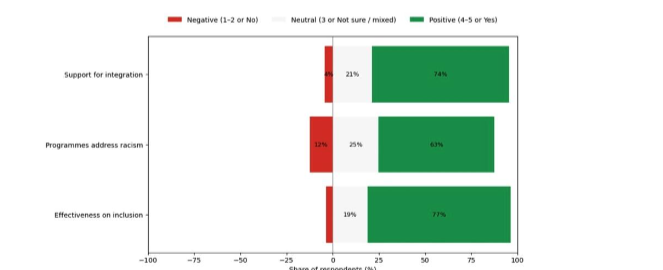
3. Ordinal Data: When measuring opinions or effectiveness on a scale, ordered bars allow us to see where the majority of the population stands.
4. Numerical Data: Continuous data, such as age, is best visualized through Histograms or Box Plots to show the distribution and outliers within a group.
Key Findings
The data gathered through the BRISWA 2.0 surveys reveals a striking disconnect between the perceived value of sports and the actual experiences of participants. Our findings show that while 92
percent of students believe sports are vital for social integration, the reality for many is quite different.
Approximately 20 percent of surveyed students reported experiencing direct racial discrimination.
Perhaps most concerning is the Support Gap: only 3.6 percent of those victims received any form of assistance or institutional follow-up.
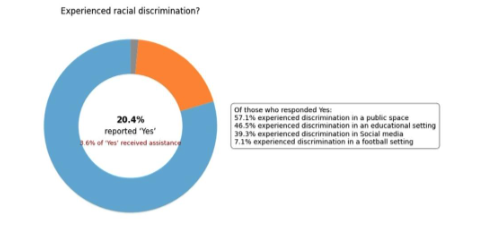
Data storytelling also allows us to map exactly where these incidents occur, which is vital for policy design. Our research indicates that discrimination is not limited to the pitch. It is concentrated in three main areas:
● Public spaces and transportation
● Educational environments
● Social media platforms
By identifying these “hotspots” stakeholders can move from broad, ineffective statements to targeted interventions.
The goal of the BRISWA 2.0 project is to provide a practical guide for using data effectively.
By making complex dynamics visible and relatable, we help football clubs, universities, and associations move from reactive responses to strategic action. We are not just reporting on a problem; we are using data to build a blueprint for a more inclusive sporting world.